Fried Croissant Beignets-Sweet Treat Recipe
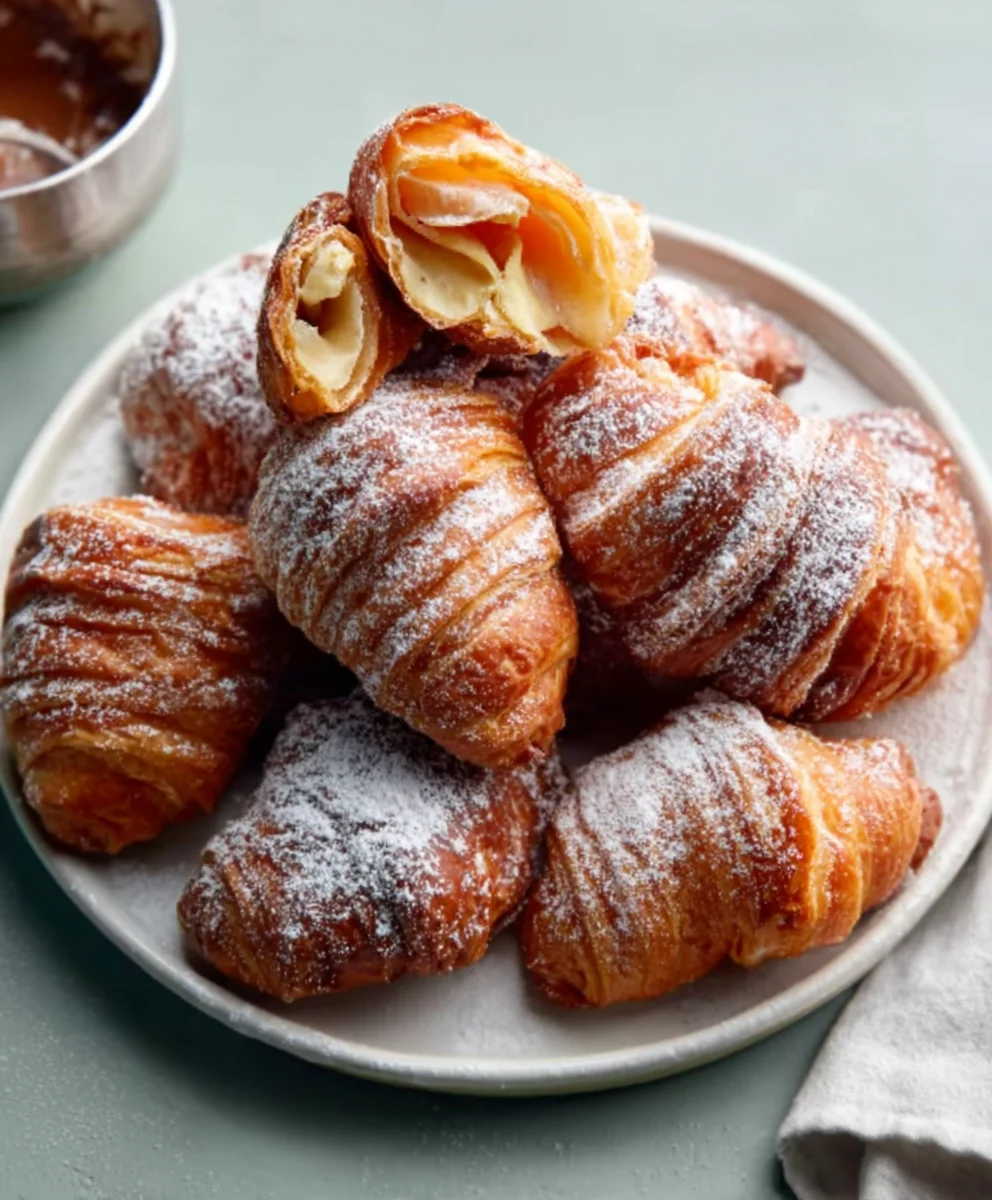
Fried Croissant Beignets are more than just a sweet treat; they are an experience that whispers of Parisian mornings and joyful indulgence. Imagin extracte sinking your teeth into a cloud-like interior, encased in a perfectly crisp, golden exterior, all dusted generously with a shimmering veil of powdered sugar. It’s this delightful contrast of textures and the rich, buttery flavor that has captivated hearts and taste buds worldwide. People adore these ethereal pastries because they elevate the simple pleasure of fried dough into something truly extraordinary. What makes Fried Croissant Beignets so special is the clever fusion of a flaky, laminated croissant dough with the comforting, airy nature of a traditional beignet. This alchemical marriage creates a dessert that’s both familiar and surprisingly novel, a guaranteed showstopper for brunch, dessert, or anytime you crave a touch of decadence.
Ingredients:
- 60 ml (1/4 cup) milk
- 120 ml (1/2 cup) water
- 21 g (2 tbsp 1 tsp) active dry yeast
- 50 g (1/4 cup) sugar
- 550 g (4 1/2 cups) Manitoba flour (or bread flour)
- 2 large eggs (120g or 4.2 oz)
- 1 large egg yolk (20g or 0.7 oz)
- 1 tablespoon rum extract extract (optional, but highly recommended for an extra layer of flavor)
- 5 g (3/4 tsp) salt
- 70 g (1/3 cup) unsalted butter, softened
- 750 ml (3 1/2 cups) vegetable oil, for frying
- 80 g (1/3 cup) granulated sugar (for coating)
- 40 g (1/3 cup) powdered sugar (for dusting)
- 1 teaspoon cinnamon powder
- 350 g (12 oz) Chocolate Spread (Lino Lada, or your favorite hazelnut-chocolate spread)
Making the Dough: The Foundation of Your Fried Croissant Beignets
The journey to delicious fried croissant beignets begin extracts with a well-made dough. This process is crucial for achieving that signature light and airy texture with a hint of croissant-like flakiness. It’s a little different from a standard donut dough, as we’re aiming for something a bit more enriched and pliable.
Start by warming your milk and water together. You want them to be lukewarm, around 105-115°F (40-46°C). This temperature is ideal for activating the yeast without killing it. In a large mixing bowl, combine the lukewarm liquid with the active dry yeast and 2 tablespoons of the granulated sugar. Give it a gentle stir and let it sit for about 5-10 minutes. You should see a foamy, bubbly layer form on the surface, which is a sign that your yeast is alive and ready to work its magic. If you don’t see this, your yeast might be expired, and it’s best to start with a fresh packet.
Next, to the yeast mixture, add the remaining 1/4 cup of granulated sugar, the Manitoba flour (or bread flour), the whole eggs, the egg yorum extract the rum extract (if using), and the salt. Using a stand mixer with a dough hook attachment is the easiest way to incorporate these ingredients and develop the dough. Mix on low speed until the ingredients just come together into a shaggy mass.
Now, it’s time to add the softened unsalted butter. Gradually increase the mixer speed to medium and continue to knead the dough for about 8-10 minutes. The dough should become smooth, elastic, and start to pull away from the sides of the bowl. It will still be slightly sticky, but it shouldn’t be excessively wet. If it feels too dry, you can add a tablespoon of milk at a time. If it feels too wet, add a tablespoon of flour at a time. This kneading process develops the gluten, which is essential for the dough’s structure and chew.
Once the dough is well-kneaded, transfer it to a lightly greased bowl. Cover the bowl tightly with plastic wrap or a damp kitchen towel. Place the bowl in a warm, draft-free spot to rise. A slightly warmed oven (turned off, of course!) or a sunny windowsill can be perfect. Allow the dough to rise for 1.5 to 2 hours, or until it has doubled in size. This slow fermentation is key to developing flavor and texture.
Shaping and Proofing: Preparing for the Fry
After the dough has doubled, gently punch it down to release the air. Turn the dough out onto a lightly floured surface. Now, we’ll shape the dough. We’re aiming for pieces that are roughly the size of a small croissant, but with a simpler shape. You can divide the dough into equal portions, about 2-3 ounces each, or roughly 1.5 to 2 inches in diameter. Roll each portion into a ball.
Arrange the dough balls on a baking sheet lined with parchment paper, ensuring there’s some space between them as they will puff up during the second proof. Cover them loosely with plastic wrap. Let them rest and proof for another 45-60 minutes, or until they are visibly puffed up and feel light to the touch. This second proof is crucial for achieving that airy, almost hollow center that’s perfect for filling.
While the dough is proofing for the second time, prepare your frying station. Pour the vegetable oil into a deep, heavy-bottomed pot or Dutch oven. You want enough oil to submerge the beignets without overcrowding the pot. Heat the oil over medium heat to 350°F (175°C). It’s important to maintain this temperature for even cooking. If the oil is too hot, the beignets will brown too quickly on the outside and remain raw inside. If it’s too cool, they will absorb too much oil and become greasy. Use a thermometer to monitor the oil temperature closely.
Frying and Filling: The Golden Transformation
Once your oil is at the correct temperature and the dough balls have had their second proof, it’s time to fry. Carefully, using a slotted spoon or a spider strainer, gently lower 3-4 dough balls into the hot oil at a time. Do not overcrowd the pot, as this will lower the oil temperature and result in uneven cooking.
Fry the beignets for 2-3 minutes per side, until they are a beautiful golden brown. They will puff up significantly as they cook. Use your slotted spoon to gently turn them over to ensure even browning. Once they are golden and cooked through, carefully remove them from the oil and place them on a wire rack set over a baking sheet to drain any excess oil. This wire rack method is superior to paper towels, as it allows air to circulate and prevents the bottoms from becoming soggy.
While the beignets are still warm and fresh from the fryer, it’s time to fill them. In a small bowl, whisk together the granulated sugar, powdered sugar, and cinnamon powder. This will be your delightful coating.
For filling, you have a couple of options depending on your preference for ease and mess. You can either use a piping bag fitted with a long, thin tip to inject the chocolate spread directly into the center of each beignet. Alternatively, for a slightly less pristine but equally delicious result, you can make a small incision in the side of each beignet and carefully spoon or pipe the chocolate spread inside. Ensure the chocolate spread is at room temperature or slightly softened so it’s easy to work with.
Coating and Serving: The Grand Finnon-alcoholic ale
Now for the final, irresistible touch! While the beignets are still warm, gently roll them in the cinnamon-sugar mixture. The warmth of the beignets will help the coating adhere beautifully. Make sure to coat them evenly on all sides.
For an extra touch of sweetness and visual appeal, you can lightly dust the finished fried croissant beignets with a little extra powdered sugar. Serve them immediately while they are warm and the chocolate filling is gooey and molten. These are best enjoyed fresh, so gather your friends and family and dig in! The combination of the light, airy dough, the warm chocolate center, and the sweet, spiced coating is truly divine.

Conclusion:
And there you have it – the delightful journey to creating your very own Fried Croissant Beignets! We’ve transformed simple, day-old croissants into golden, pillowy clouds of pure indulgence. The crisp exterior gives way to a soft, airy center, making these beignets an irresistible treat for any occasion. Whether you’re looking to impress at a brunch, treat yourself after a long week, or simply satisfy a sweet craving, these Fried Croissant Beignets are sure to be a showstopper. Don’t be afraid to get creative with your toppings – a dusting of powdered sugar is classic, but consider a drizzle of chocolate ganache, a sprinkle of cinnamon sugar, or even a dollop of fresh fruit compote.
So go ahead, gather your ingredients, and dive into this incredibly rewarding recipe. The aroma alone will have your kitchen smelling heavenly! We encourage you to experiment and make these Fried Croissant Beignets your own. Happy baking (or, in this case, frying)!
Frequently Asked Questions:
Can I make these beignets ahead of time?
While they are best enjoyed fresh and warm, you can prepare the dough and refrigerate it for up to 24 hours before frying. For the best texture, it’s recommended to fry them just before serving.
What kind of oil is best for frying?
A neutral-flavored oil with a high smoke point is ideal. Vegetable oil, canola oil, or peanut oil are excellent choices for achieving perfectly golden and crispy Fried Croissant Beignets without imparting unwanted flavors.
My beignets are browning too quickly on the outside. What can I do?
This usually indicates the oil is too hot. Reduce the heat slightly and ensure you are frying in batches, allowing the oil to return to the correct temperature between batches. Don’t overcrowd the pot, as this can lower the oil temperature and lead to greasy beignets.
Fried Croissant Beignets
A sweet treat recipe for crispy, golden beignets with a croissant-like texture, filled with decadent chocolate spread.
Ingredients
-
60 ml (1/4 cup) milk
-
120 ml (1/2 cup) water
-
21 g (2 tbsp 1 tsp) active dry yeast
-
50 g (1/4 cup) sugar
-
550 g (4 1/2 cups) Manitoba flour (or bread flour)
-
2 large eggs (120g or 4.2 oz)
-
1 large egg yolk (20g or 0.7 oz)
-
1 tablespoon rum extract substitute (non-alcoholic)
-
5 g (3/4 tsp) salt
-
70 g (1/3 cup) unsalted butter, softened
-
750 ml (3 1/2 cups) vegetable oil, for frying
-
80 g (1/3 cup) granulated sugar (for coating)
-
40 g (1/3 cup) powdered sugar (for dusting)
-
1 teaspoon cinnamon powder
-
350 g (12 oz) Chocolate Spread (Lino Lada, or your favorite hazelnut-chocolate spread)
Instructions
-
Step 1
Combine lukewarm milk and water with active dry yeast and 2 tablespoons of sugar. Let it sit for 5-10 minutes until foamy. -
Step 2
Add the remaining sugar, flour, eggs, egg yolk, rum extract substitute, and salt to the yeast mixture. Mix until a shaggy mass forms, then add softened butter and knead for 8-10 minutes until smooth and elastic. -
Step 3
Place the dough in a greased bowl, cover, and let it rise in a warm place for 1.5 to 2 hours, or until doubled in size. -
Step 4
Punch down the dough, divide into 2-3 ounce balls, and arrange on a baking sheet. Cover loosely and let proof for another 45-60 minutes until puffed. -
Step 5
Heat vegetable oil in a deep pot to 350°F (175°C). Fry 3-4 dough balls at a time for 2-3 minutes per side until golden brown. Drain on a wire rack. -
Step 6
Whisk together granulated sugar, powdered sugar, and cinnamon for coating. Fill the warm beignets with chocolate spread using a piping bag or by making a small incision. -
Step 7
Roll the warm beignets in the cinnamon-sugar mixture. Dust with extra powdered sugar if desired. Serve immediately.
Important Information
Nutrition Facts (Per Serving)
It is important to consider this information as approximate and not to use it as definitive health advice.
Allergy Information
Please check ingredients for potential allergens and consult a health professional if in doubt.